Manufacturing

Place fibers where they deliver the greatest benefit

Depending on component geometry, loading and planned volume, we use different processing methods. What matters is placing the fibers specifically where and in the direction in which they provide the greatest structural benefit. UD tapes are used in every manufacturing process.

Winding of a fibre-reinforced composite

Material

UD tapes, material combinations and quality – the semi-finished product used in every process.

To the material page

Development

Load cases, design, simulation and prototype – before a reproducible manufacturing process is defined.

To the development page

Processes

Four routes from tape to component

Tape laying

Tape laying

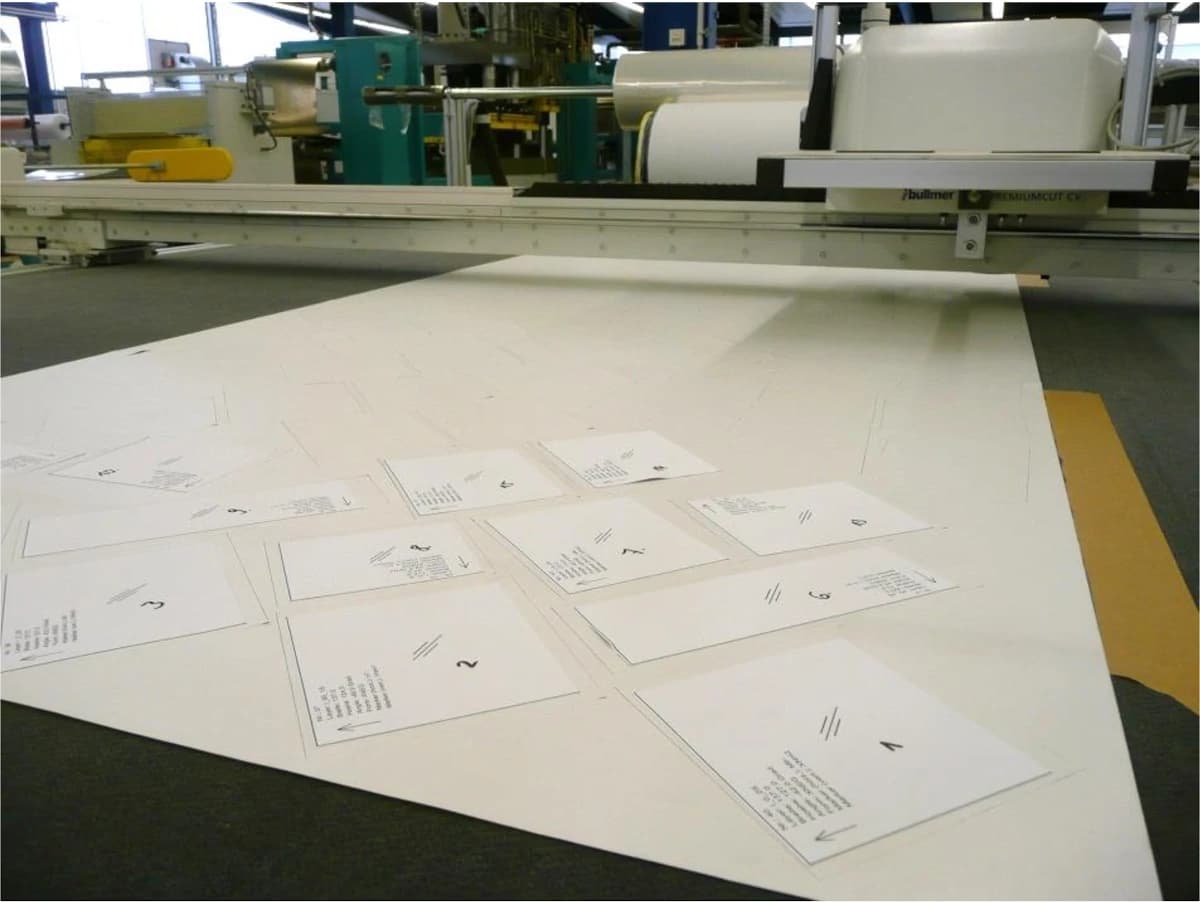
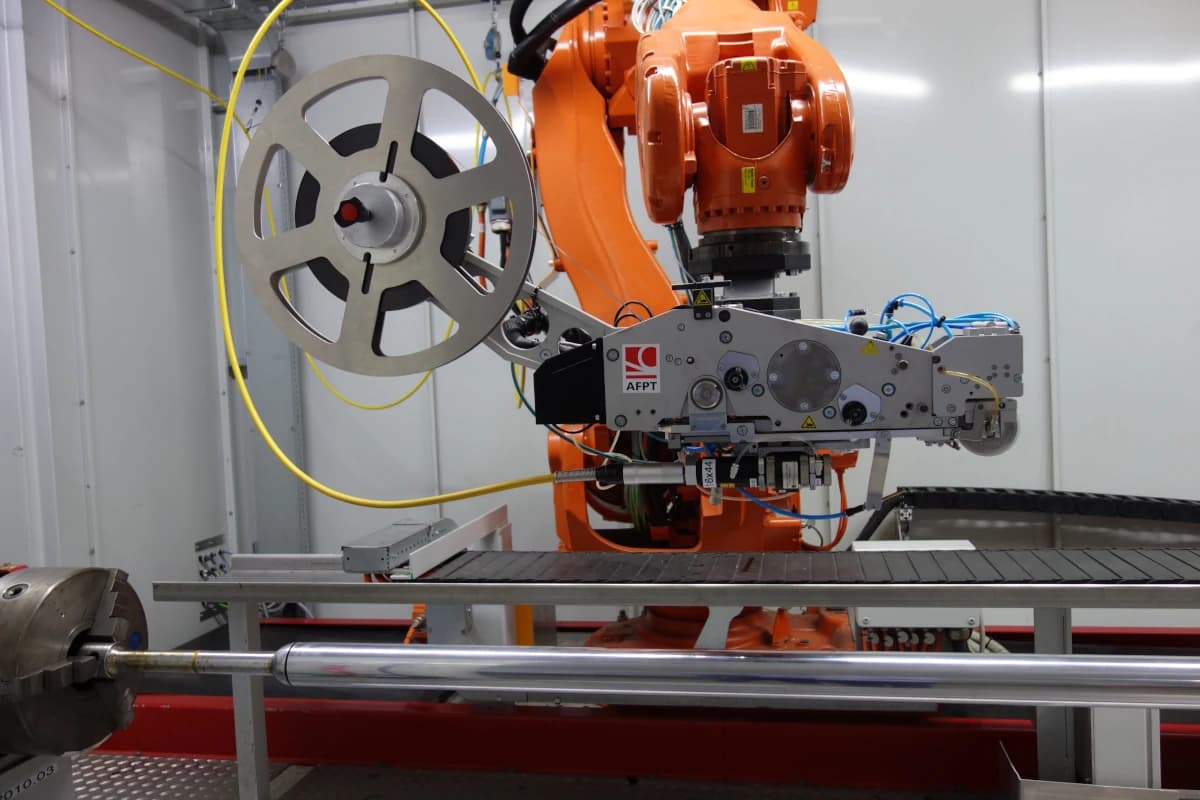
In tape laying, thermoplastic UD tapes are positioned automatically along defined placement paths. Fiber orientation and material use can thus be matched specifically to the component load – from local reinforcements through to a complete laminate stack-up.

Thermoplastic winding

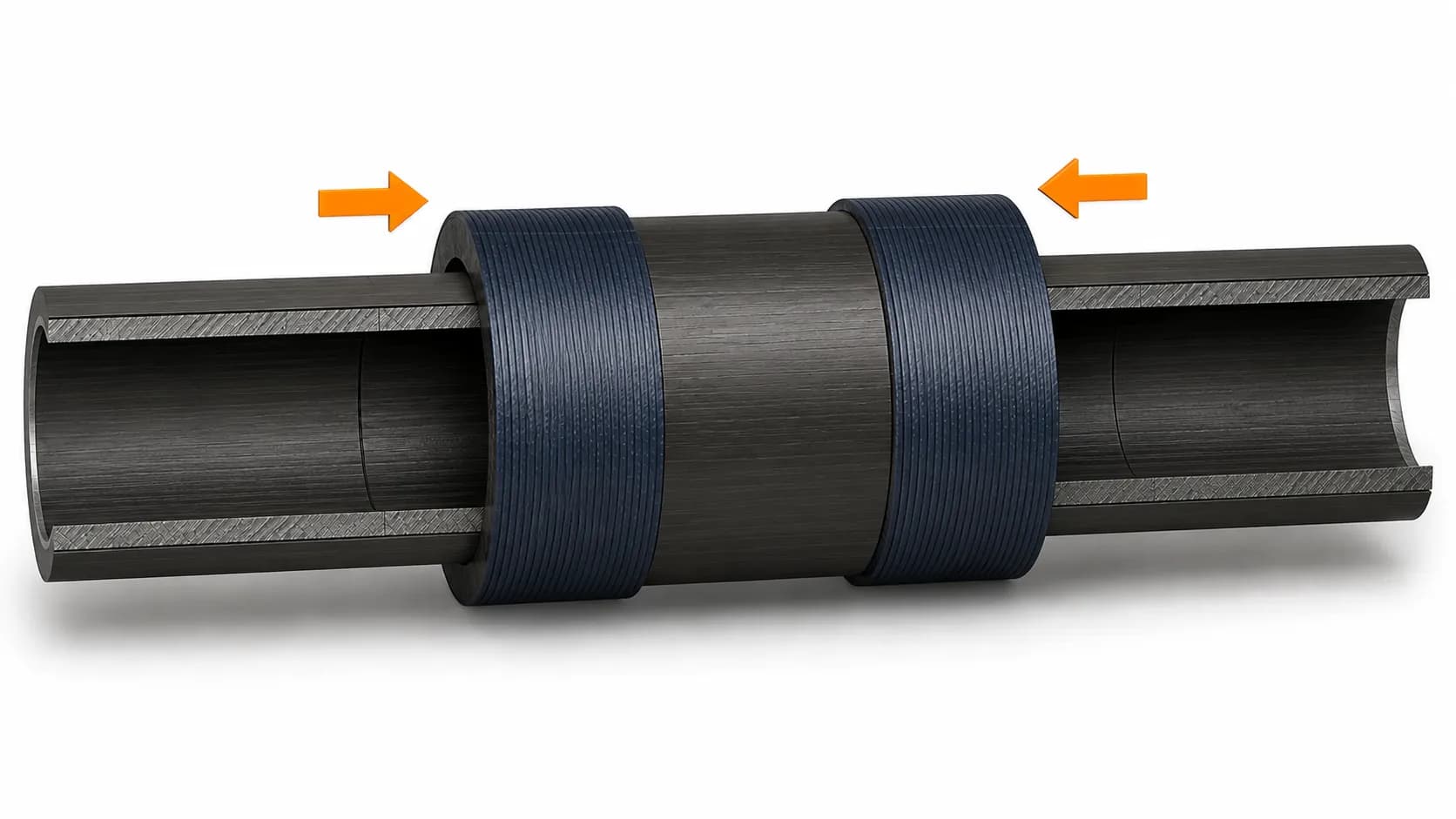
Thermoplastic winding

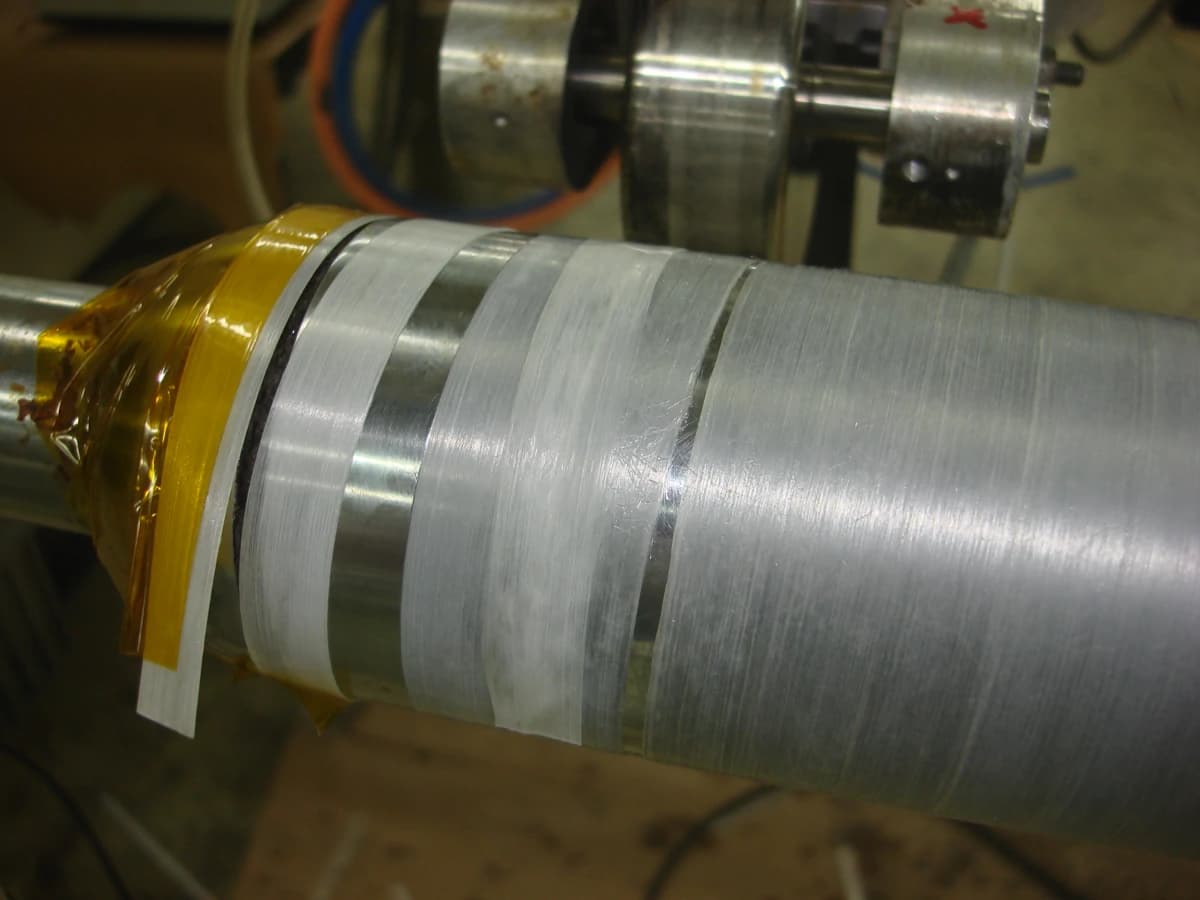
In thermoplastic winding, UD tapes are placed and consolidated on a rotating mandrel at defined fiber angles. The process is particularly suitable for pipes, shafts and rotationally symmetric components that must withstand high pressure, bending or torsion loads.

Forming

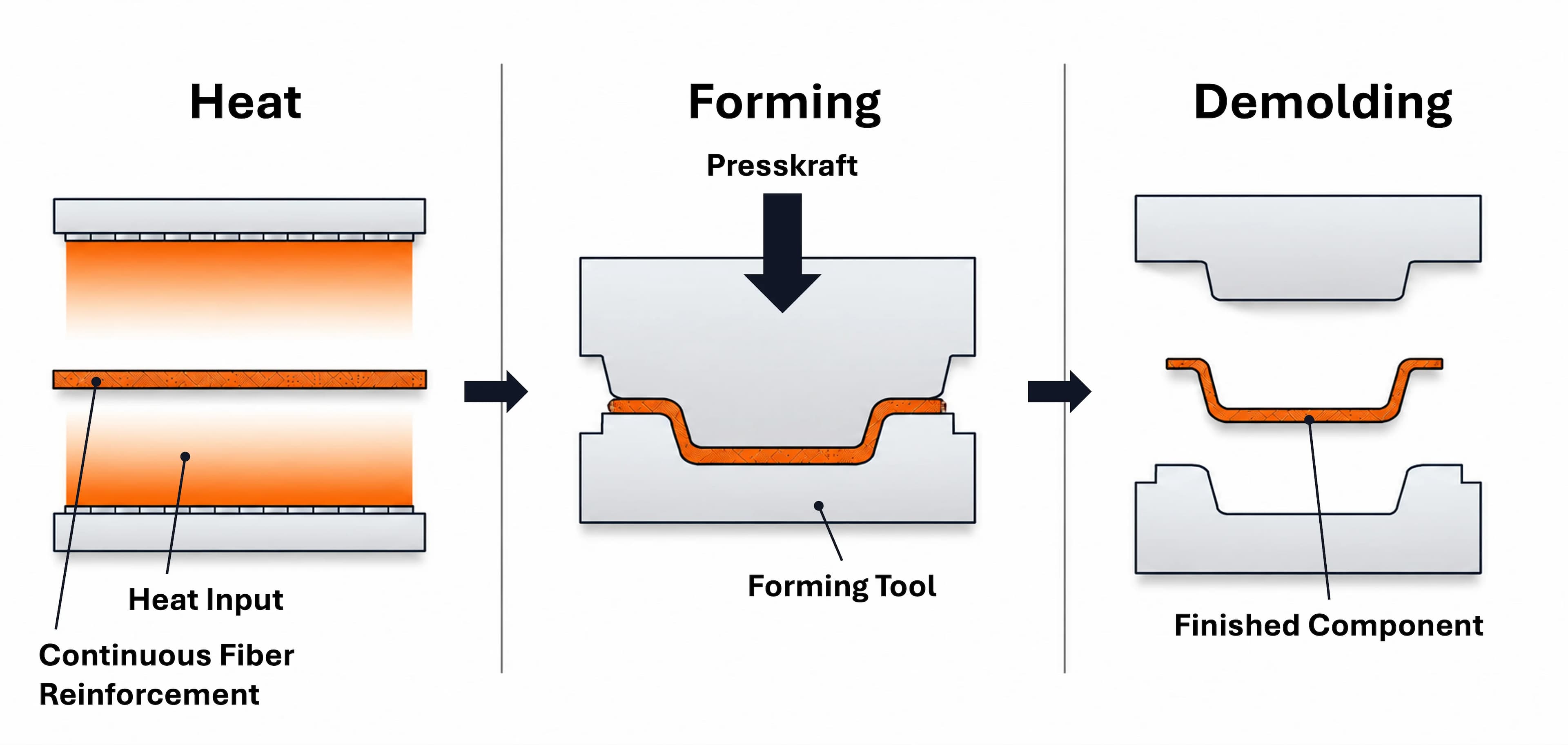
Forming

In forming, UD tapes are heated and pressed into the desired component geometry. The process enables economical production of three-dimensional, highly loadable structural parts with short cycle times and reproducible quality.

Overmolding

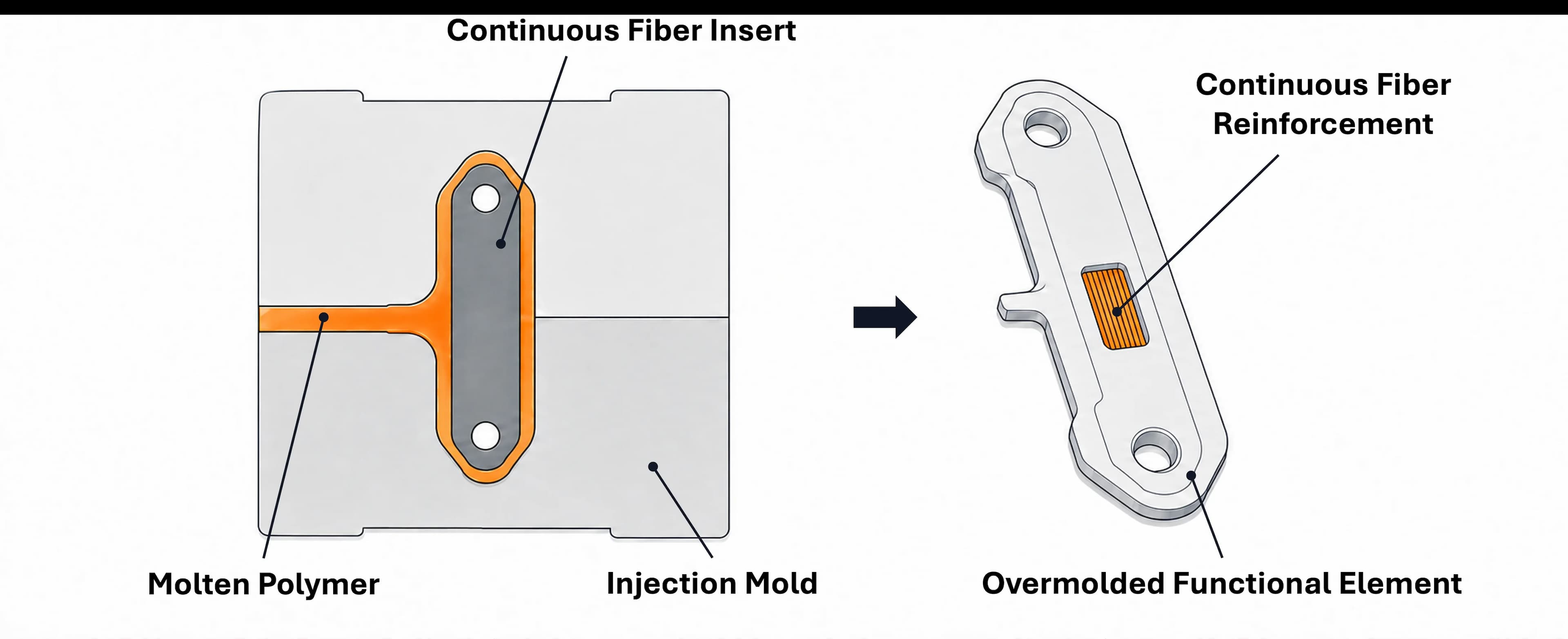
Overmolding

In overmolding, UD tapes are placed in an injection mold and overmolded with a thermoplastic. This combines the high stiffness and strength of continuous fibers with ribs, interfaces, fastening points and further functional elements.

Read more in our blog post on overmolding

Entry points

From the first trial to industrial implementation

You do not need to arrive with a finished series component. Entry into manufacturing is possible at different maturity levels – from the first processing trial through to a transferable series process. Together we define the next manufacturing step and a concrete, assessable result.

Material trial

Custom UD tape for first processing and feasibility trials

Demonstrator

Proof that material, component concept and manufacturing principle work in principle

Functional prototype

A working component for load tests and technical validation

Process development

A documented, reproducible manufacturing sequence with defined process parameters

Industrialization

A transferable manufacturing concept and implementation with suitable machine-building and series partners

Not sure which entry point fits your project?

Together we clarify requirements, development status and the next sensible step.

Discuss manufacturing

Applications

Typical components and manufacturing approaches

Fiber-thermoplastic composites can be matched specifically to different component geometries and load types. What matters is the combination of a load-appropriate fiber orientation and a suitable manufacturing process.

Pipes, shafts and pressure structures

Pipes, shafts and pressure structures

Pipes, drive shafts and pressure structures often have to carry internal pressure, bending and torsion at the same time. In thermoplastic winding, the UD tapes are placed at defined fiber angles and matched specifically to these loads. The result is lightweight, highly loadable and corrosion-resistant hollow structures.

Lightweight axes and robot components

Lightweight axes and robot components

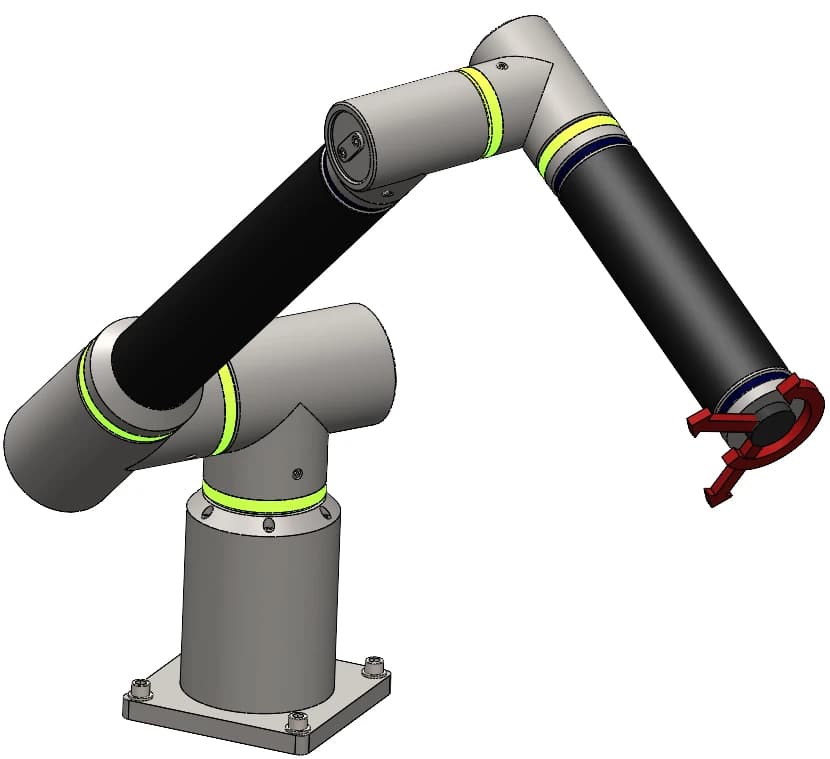
For robot arms, machine axes and moving beams, high stiffness, low weight and good dynamic behavior are central. Longitudinally oriented fibers carry bending loads, while additional angled plies increase torsional stiffness. Depending on geometry, thermoplastic winding, tape laying or a combination of processes is used.

Locally reinforced injection-molded parts

Locally reinforced injection-molded parts

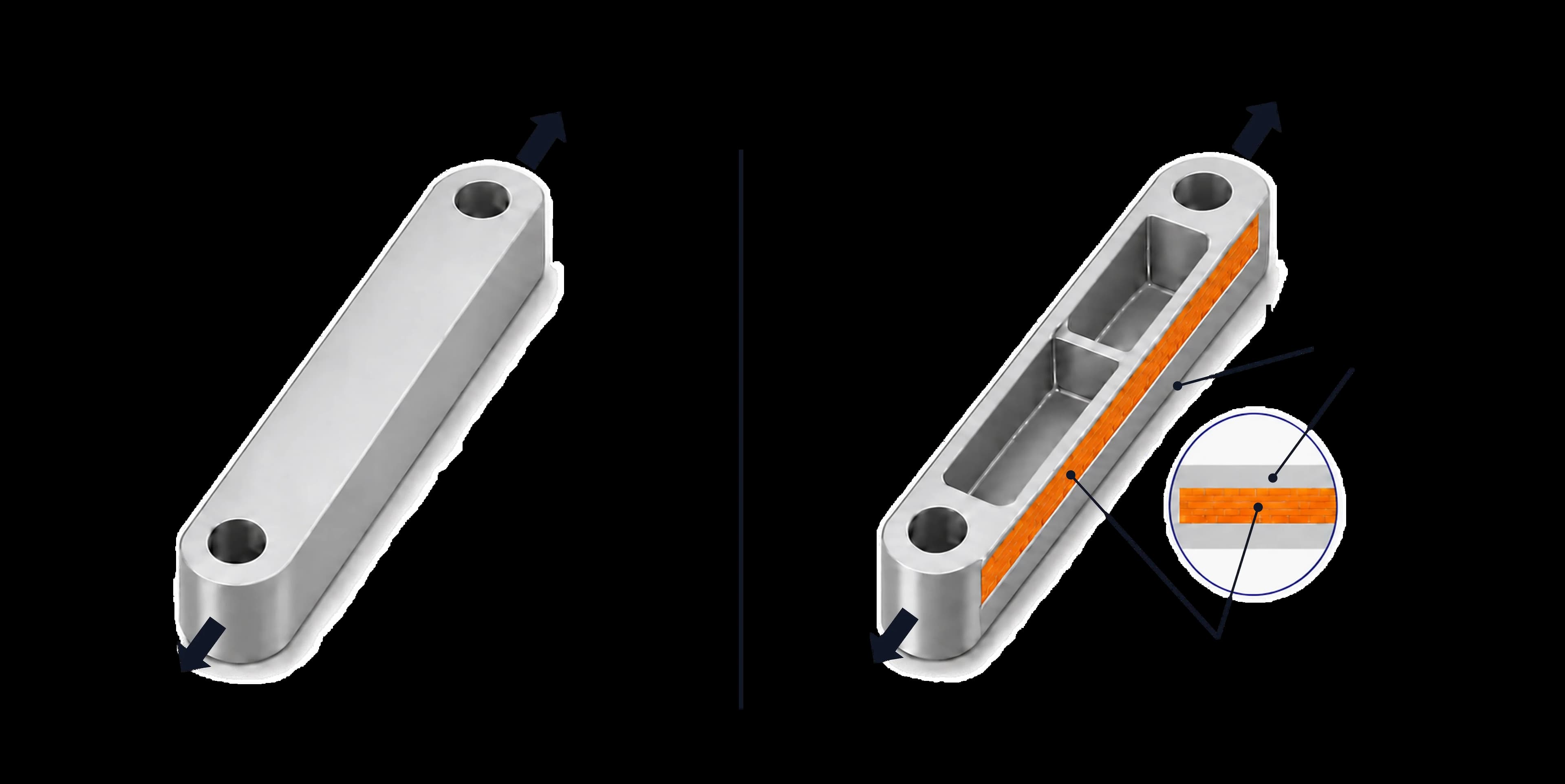
In injection-molded parts, high loads often occur only in individual areas such as fastening points, bearing seats or load introductions. Continuous-fiber inserts are positioned there specifically and then overmolded. The part thus combines the high stiffness and strength of continuous fibers with the design freedom and functional integration of injection molding.

Sheet-like structural parts and organosheets

Sheet-like structural parts and organosheets

Tape laying can produce sheet-like laminates with specifically adapted fiber orientations and local reinforcements. The consolidated semi-finished products can then be heated and formed into three-dimensional structural parts. This yields lightweight shell and beam structures with high mechanical performance and short manufacturing cycles.

The right design follows from component geometry, load case, functional scope and planned volume. On that basis we develop a matching laminate stack-up and a reproducible manufacturing process.
Which process fits your component?

Whether winding, tape laying, forming or overmolding: together we clarify geometry, volume and the next manufacturing step.

Discuss manufacturing

Case studies are on the homepage. Further background is in the blog.

USE OF COOKIES