Material
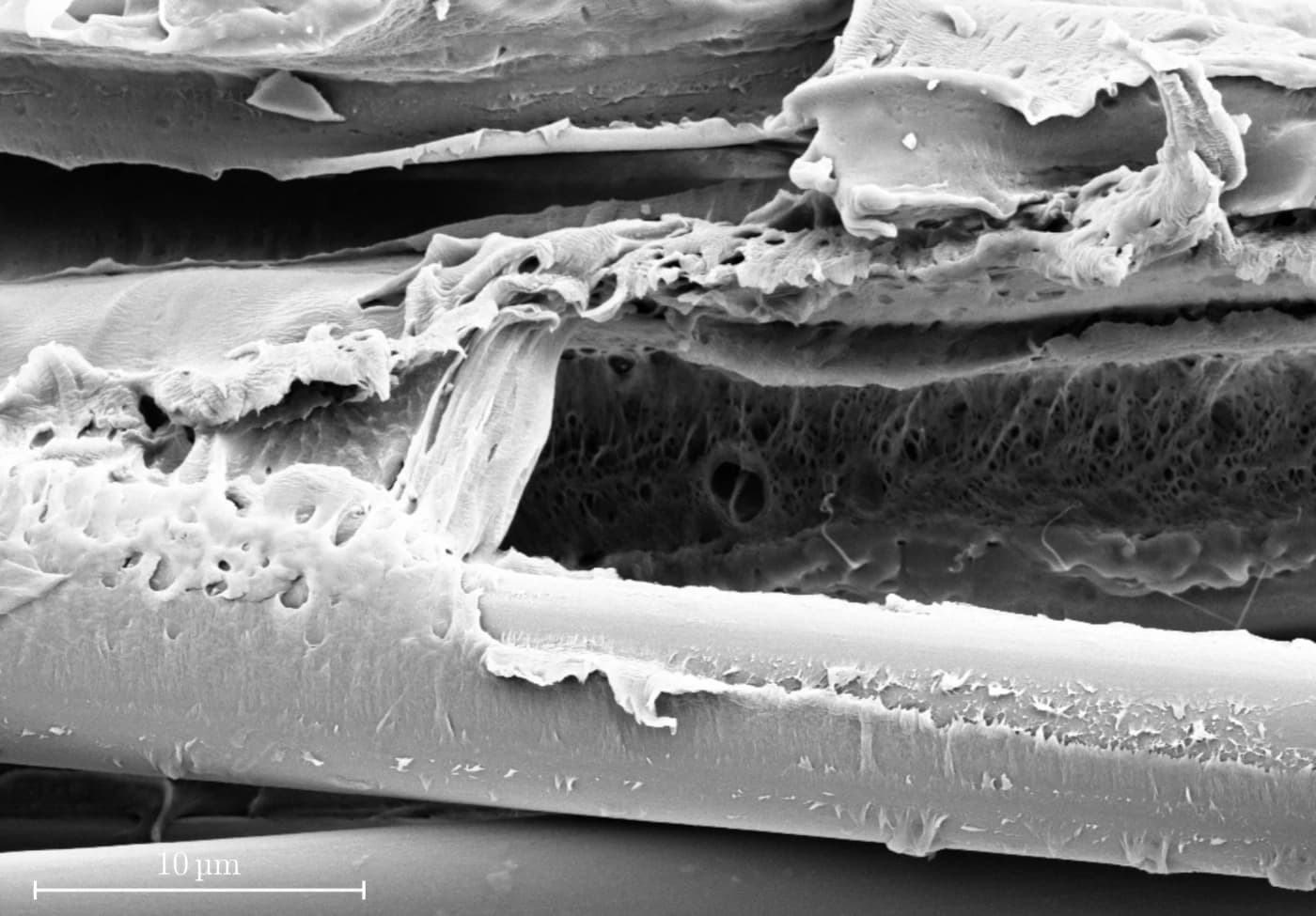
… we open up new performance limits with tailored fiber-thermoplastic composites.
Careers · starting immediatelyWorking student / student assistant (m/f/d) in mechanical engineering and automation — 8–16 h/week in Neustadt (German required)
View job postingCustomer value
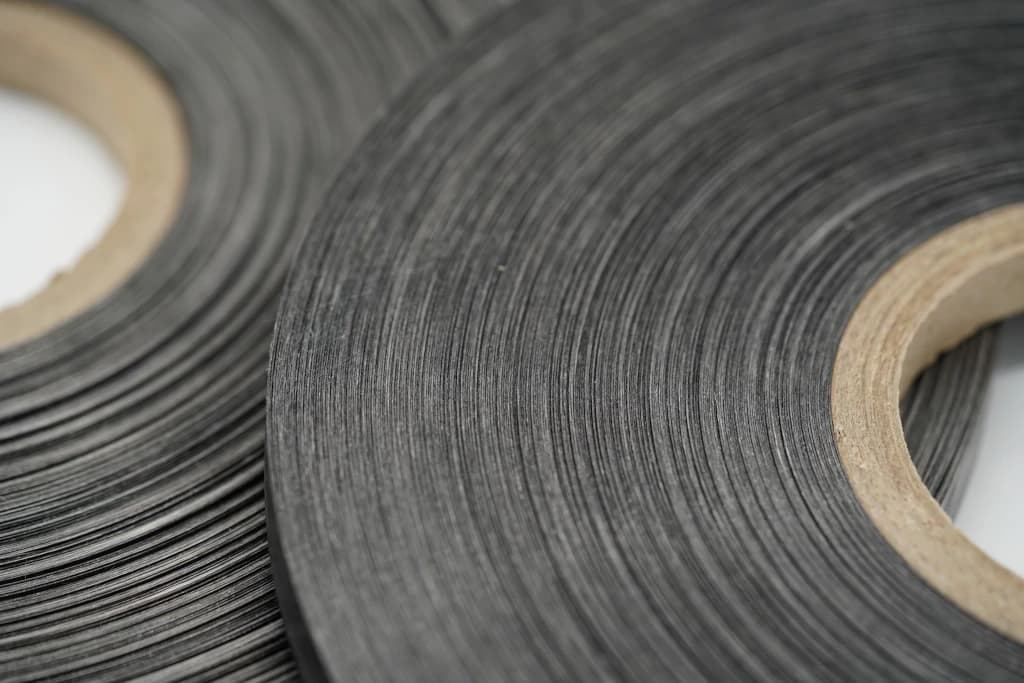
Using continuous fiber-reinforced thermoplastic materials (UD tapes), the properties of conventional plastics can be significantly improved.
Targeted reinforcement along actual load paths delivers better mechanical properties at lower weight.
Reinforce locally instead of thickening. Carry forces with high-performance materials and remove unused material.
Developing material, geometry and manufacturing together enables function integration and reduces assembly effort.
Replace metal and achieve better results — often with less weight and twist at comparable stiffness.
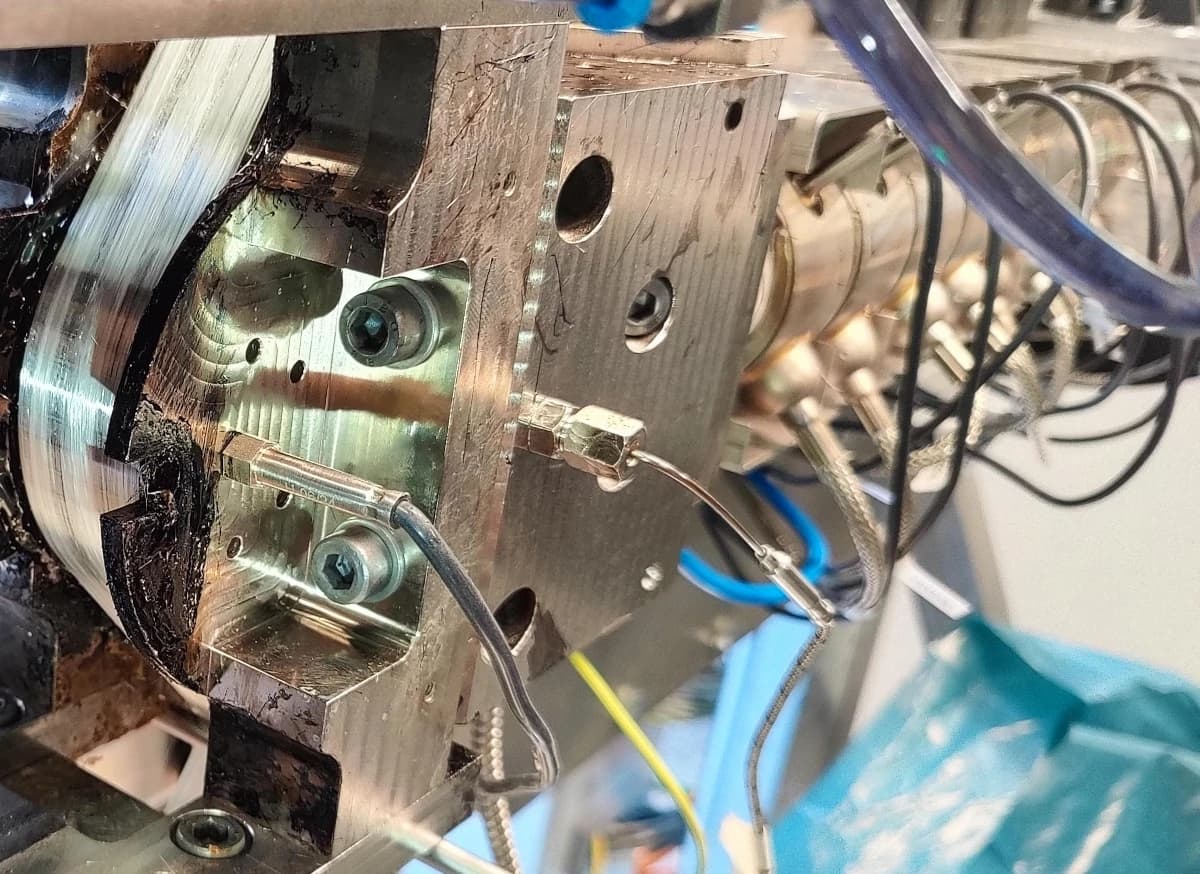
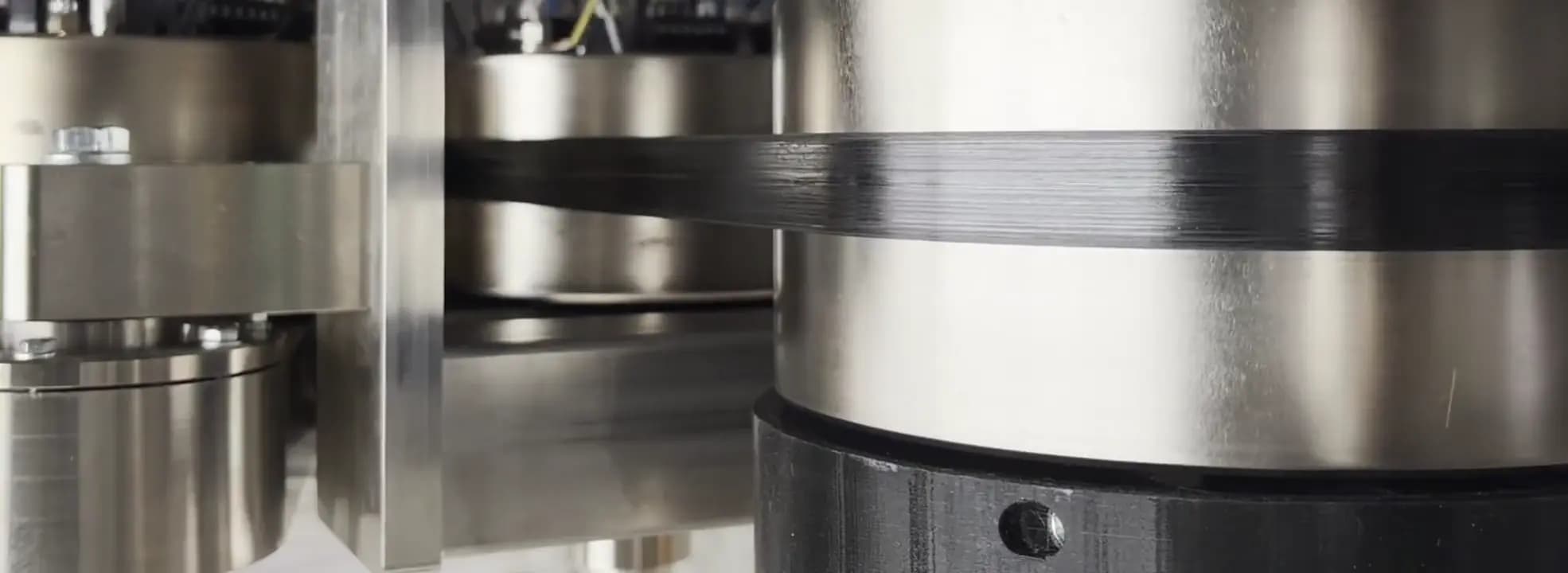
Thermoplastic processes for short cycle times and reproducible components.
Project example
Current focus: FRP pipe connections
Development project: pipe connection
In fiber-reinforced polymer (FRP) pipes under internal pressure, the joint becomes the critical interface. We develop a detachable mechanical joining method from the same material system, without welding, adhesives or metallic fittings.
We cover the background, design and manufacturing in detail in our blog post.
Joining technology for internally pressurized FRP pipes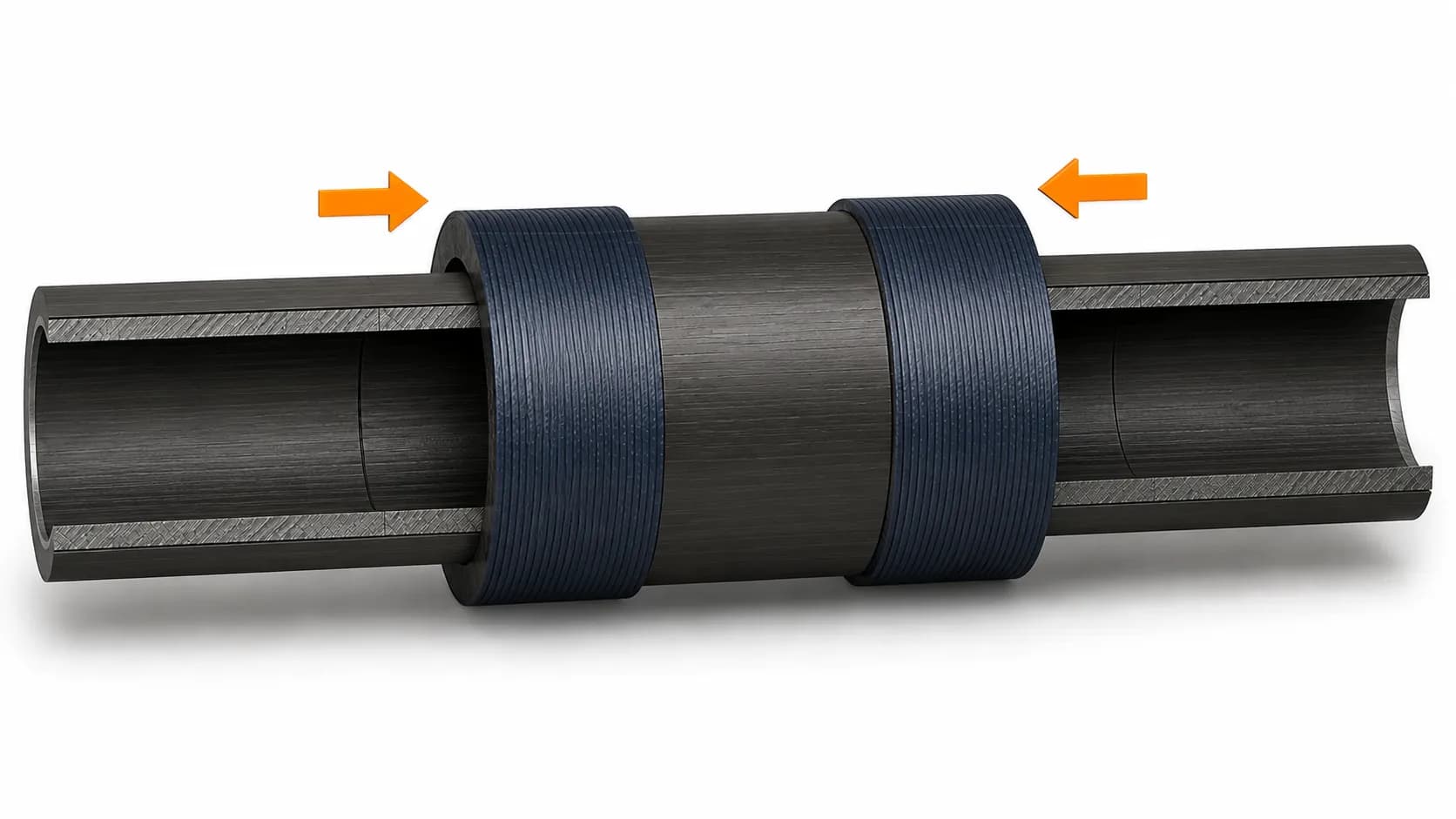
The joint consists of the two pipe ends, a connecting piece and two support rings. First the support rings are slid onto the pipe segments, then the connecting piece is positioned over the butt joint, and finally the support rings are pressed on axially to create radial preload.
The result is a fluid-tight, detachable connection without heat input.
Each part gets the fiber orientation that matches its job: hoop-reinforced support rings sustain the joining pressure, the connecting piece distributes it and conforms radially, and the pipe segments carry hoop and axial loads from internal pressure.
The joint is not designed as a rigid block, but as a coordinated set of three load-path-oriented FRP components.
| Component | Design | Role |
|---|---|---|
| Support ring | High share of hoop fibers | Generate joining pressure and hold preload |
| Connecting piece | High axial stiffness, radially compliant | Distribute joining pressure and form the sealing face |
| Pipe segment | Laminate tailored to internal pressure | Carry hoop and axial loads |
Designed for high internal pressure
Detachable instead of permanently bonded
Fluid-tight without adhesives or welding
Low thermal residual stresses
Joint and pipe use the same material pairing, without jumps in expansion or stiffness.
Significantly lighter than metal
No steel flanges or metallic fittings: system weight stays at the level of the FRP pipe.
Fast joining on site
No melting, curing or cooling. The joint is load-bearing immediately after press-fitting.
Reproducible and inspectable
Measuring the joining pressure during assembly documents and safeguards joint quality.
We support you from material and joint design through first components to testing.
Careers · starting immediately
Support us in mechanical engineering and automation — 8–16 h/week in Neustadt. The posting is in German; C1 German is required.
Capabilities
Everything for your fiber composite solution from a single source
We combine material development, component design and manufacturing into one end-to-end solution for highly loaded parts made of fiber-thermoplastic composites.
Custom UD tapes from our own production
Characterization, simulation and load-path-oriented design
Tooling, process and prototype development
Validation and transfer into industrial processes
We use cookies to provide you with the best online experience and to tailor content to your interests. By clicking "Accept all", you consent to the storage and reading of information on your device. You also consent to the further processing of the collected personal data and its possible transfer outside the European Union, for example to the USA. For more detailed information on how we use and manage cookies, please click "Customize". By clicking "Decline cookies", you refuse the use of cookies that require consent.