Thermoplastics – The Next Stage in the Evolution of FRP-Technology
Why thermoplastic matrix systems are increasingly replacing thermosets.

In the world of fiber-reinforced polymer composites (FRP) a clear paradigm shift is emerging: Thermoplastics are increasingly displacing thermosets as matrix systems for the production of continuous fiber reinforced composites in applications that were once firmly in the hands of thermosets. But what makes thermoplastic matrices so attractive – and why are they considered the next stage in the evolution of FRPs?
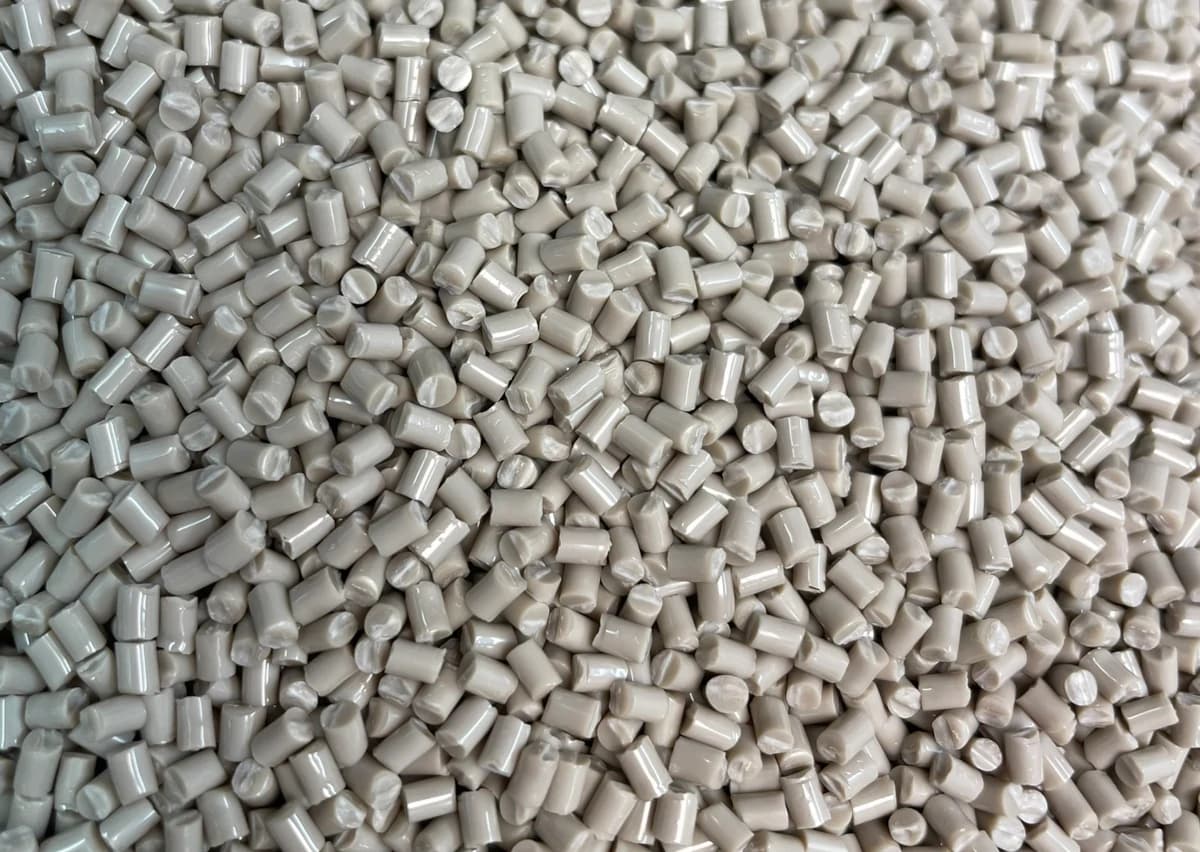
The fundamental difference between thermoplastics and thermosets lies in their molecular structure and behavior when exposed to heat: while thermosets are characterized by an irreversible crosslinking of their polymer chains and cannot be reshaped after curing, thermoplastics soften and can be reshaped repeatedly when heated. This property makes them recyclable and opens up entirely new possibilities for processing and repairing FRP components.
The Rise of Thermoplastics
Traditionally, thermosets such as epoxy or polyester resins dominated the FRP world – especially in aerospace. However, thermoplastics have steadily gained market share. According to Carbon Composites e.V., growth is about 5 % per year [1]. The reasons are the aforementioned clear technological and ecological advantages.
Advantages of Thermoplastic Matrix Systems
1. Cost Efficiency
Thermoplastics are generally much less expensive than thermosets. While one kilogram of PA6 (polyamide 6) costs around €4 – depending on the purchased volume, an epoxy resin/hardener mix is about €9 per kilogram. These cost advantages add up, especially in mass production.
2. Suitability for Mass Production
Unlike thermosets, thermoplastics do not require lengthy curing. After melting and shaping, they can be cooled to solidify immediately. This enables cycle times of less than one minute per part – a decisive advantage for high-volume manufacturing.
3. Recyclability
Thermoplastics can be melted and reformed repeatedly – ideal for the circular economy. Studies show many thermoplastics can be recycled up to seven times without significant property loss [2].
4. Weldability and Formability
Because they melt, thermoplastic laminates are ideal for various joining methods. Induction, ultrasonic, or laser welding can achieve weld times of under ten seconds. Their formability also allows complex geometries with wall thicknesses from 0.5 mm to 5 mm [3].
5. Unlimited Shelf Life
No limited pot life, no cold chain. Thermoplastics in solid form are stable in storage and retain their properties for years.
6. Malleability
Local reheating allows post-processing or repairs – a huge advantage over thermosets. Forming temperatures range from about 150 °C to 400 °C depending on the material.
7. High Impact Toughness
Thermoplastics offer high security under impact loads – ideal for automotive and sporting applications. Some thermoplastics achieve elongation at break over 50 %, while thermosets often fail below 5 % strain [4].
8. Expanded Design Possibilities
Local heating and reshaping opens new design freedoms. Complex geometries, integrated functional elements, and local reinforcements can be realized efficiently. Thermoplastic overmolding enables integration of fasteners, seals, or electrical contacts directly into the process. The integral construction approach benefits from weldability – complex assemblies can be made from fewer parts, saving weight and reducing production costs. Local heating also allows targeted reinforcement or functional integration.
9. High Temperature and Flame Resistance
High-performance thermoplastics such as PEEK (polyether ether ketone) offer continuous use temperatures up to 250 °C and peak temperatures up to 300 °C. PPS (polyphenylene sulfide) is inherently flame retardant and meets UL94 V-0 classification without additives.
Challenges
Thermoplastic fiber composites pose specific processing challenges, which is why they have been less widespread than thermosets. A central challenge is the high viscosity of thermoplastics in the molten state. While thermosets like epoxy have viscosities around 0.7 Pa·s, thermoplastics such as polypropylene reach about 140 Pa·s – roughly 100–200 times higher [4]. This high viscosity makes fiber impregnation difficult and requires specialized processing techniques. Various approaches exist to address this:
| Process | Description | Advantages | Disadvantages |
|---|---|---|---|
| Commingled Yarn | Fibers and thermoplastic in fiber form are spun into a yarn that is processed in the manufacturing step. | Good fiber-matrix distribution | Cost-intensive, specialized semi-finished product |
| Film-Stacking | Thermoplastic films are alternately stacked with dry fiber plies and consolidated under heat and pressure (e.g., interval press). | Can be executed as pressing or infrared | Complex for rotational parts; films are expensive to produce |
| UD-Tapes | Pre-consolidated unidirectional tape with fibers impregnated by thermoplastic resin. | Excellent fiber-matrix distribution; good mechanical properties; versatile processing | Requires specialized production equipment; quality of semi-finished tapes is critical |
| In-Situ Polymerization (ε-Caprolactam) | Polymerization of ε-caprolactam directly in the fiber structure under vacuum and heat. | Excellent fiber-matrix distribution; high mechanical properties; no viscosity issues | High process control requirements; limited materials (mainly PA6); part producers must handle chemistry |
Among these impregnation methods, UD-Tapes have proven particularly promising. They offer a balanced compromise between excellent mechanical properties and comparatively low processing effort. UD-Tapes enable precise fiber orientation and optimal fiber distribution in the matrix, resulting in outstanding material properties. Additionally, they feature short processing times and high reproducibility of part properties. A growing market of processing machine vendors now offers dedicated UD-Tape solutions.
Conclusion
Continuous fiber reinforced thermoplastic composites have long since established themselves as an industrially viable solution – particularly through the use of UD-Tapes. These pre-consolidated semi-finished products enable short cycle times, high reproducibility, and excellent mechanical properties combined with great design freedom. Thanks to mature production processes and an expanding machine base, UD-Tape-based components are already used in many series applications – from automotive to aerospace. Combined with the ecological advantages and full recyclability of thermoplastics, they mark the next logical step in the evolution of FRP technology.
Quellen
Carbon Composites e.V., Carbon Composites Market Report 2024.
Ben Amor, I.; Klinkova, O.; Baklouti, M.; Elleuch, R.; Tawfiq, I. Mechanical Recycling and Its Effects on the Physical and Mechanical Properties of Polyamides. Polymers 2023, 15, 4561.
Neitzel, M.; Mitschang, P.; Breuer, U. (Eds.): Handbook of Composite Materials – Materials, Processing, Applications. 2nd updated and expanded ed. Carl Hanser Verlag, Munich, 2014.
Schürmann, H. (2007). Designing with Fiber-Reinforced Polymers. Springer.
Carbon Composites e.V., Carbon Composites Market Report 2024.
Ben Amor, I.; Klinkova, O.; Baklouti, M.; Elleuch, R.; Tawfiq, I. Mechanical Recycling and Its Effects on the Physical and Mechanical Properties of Polyamides. Polymers 2023, 15, 4561.
Neitzel, M.; Mitschang, P.; Breuer, U. (Eds.): Handbook of Composite Materials – Materials, Processing, Applications. 2nd updated and expanded ed. Carl Hanser Verlag, Munich, 2014.
Schürmann, H. (2007). Designing with Fiber-Reinforced Polymers. Springer.