Verbindungstechnik für innendruckbeanspruchte Rohre aus Faser-Kunststoff-Verbunden
Warum konventionelle Fügeverfahren bei faserverstärkten Rohren an Grenzen stoßen und wie eine lösbare, werkstoffgerechte Verbindung hohe Innendrücke ohne Schweißen oder Kleben überträgt.

Rohre aus Faser-Kunststoff-Verbund (FKV) verbinden eine hohe mechanische Leistungsfähigkeit mit geringem Gewicht und guter Korrosionsbeständigkeit. Damit eignen sie sich besonders für anspruchsvolle Rohrleitungssysteme. Die Vorteile des Rohrwerkstoffs können jedoch nur dann vollständig genutzt werden, wenn auch die Verbindungsstellen den auftretenden Belastungen standhalten.
Gerade bei hohen Innendrücken wird die Verbindung zur entscheidenden Schnittstelle: Sie muss dauerhaft dicht bleiben, die druckbedingten Kräfte übertragen und zugleich zur besonderen Werkstoffstruktur dünnwandiger, endlosfaserverstärkter Rohre passen – einschließlich der chemischen Beständigkeit. Konventionelle Fügeverfahren stoßen dabei schnell an Grenzen.
Warum die Verbindung von FKV-Rohren anspruchsvoll ist
Faserverstärkte Kunststoffrohre werden eingesetzt, wenn eine hohe Druckbeständigkeit mit geringem Gewicht und guter chemischer Beständigkeit kombiniert werden soll. Diese Eigenschaften dürfen an der Verbindungsstelle nicht verloren gehen: Auch sie muss die auftretenden Kräfte zuverlässig übertragen und gegenüber dem jeweiligen Fördermedium beständig sein.
Klassische Fügeverfahren sind dafür nur eingeschränkt geeignet.
Schweißen über die thermoplastische Matrix reicht häufig nicht aus. Die lasttragenden Endlosfasern werden an der Fügestelle unterbrochen, sodass die Verbindung die Kräfte nicht mehr in Faserrichtung übertragen kann. Darüber hinaus können wärmebasierte Verfahren den Grundwerkstoff und die Faser-Matrix-Struktur lokal verändern. Meist entsteht zudem eine dauerhaft nicht lösbare Verbindung.
Schraubverbindungen sind bei FKV ebenfalls problematisch. Durch Kriechen und Relaxation des Werkstoffs geht die Vorspannung rasch verloren: bereits innerhalb der ersten 24 Stunden um etwa 10–20 %, innerhalb eines Monats bis zu 40 %. Gleichzeitig führen geringe Schraubenvorspannung und großes Lochspiel zum Verkanten der Schraube und damit zu einer ungleichmäßigen Lochleibungspressung. Die Faserstruktur im Lochbereich wird lokal geschädigt. Schraubverbindungen an dünnwandigen FKV-Rohren sollten daher vermieden werden.
Kleben ist grundsätzlich möglich, aber nicht trivial. Es erfordert definierte Oberflächen, kontrollierte Prozessbedingungen und in der Regel Aushärtezeiten. Die Verbindung lässt sich anschließend meist nicht zerstörungsfrei lösen.
Stahlflansche und metallische Fittings können zwar hohe Kräfte und Innendrücke aufnehmen, weisen je nach Medium jedoch eine geringere Korrosions- und Chemikalienbeständigkeit auf. Außerdem erhöhen sie das Systemgewicht und können aufgrund unterschiedlicher Wärmeausdehnungen sowie möglicher Kontaktkorrosion zusätzliche Herausforderungen verursachen.
Naheliegend ist daher eine lösbare, werkstoffgerechte Verbindung aus einem zum Rohr kompatiblen Faser-Thermoplast-Verbund. Dadurch lassen sich Material- und Eigenschaftssprünge reduzieren und die mechanischen sowie chemischen Vorteile des Rohrsystems auch im Bereich der Verbindungsstelle weitgehend erhalten.
Das Funktionsprinzip
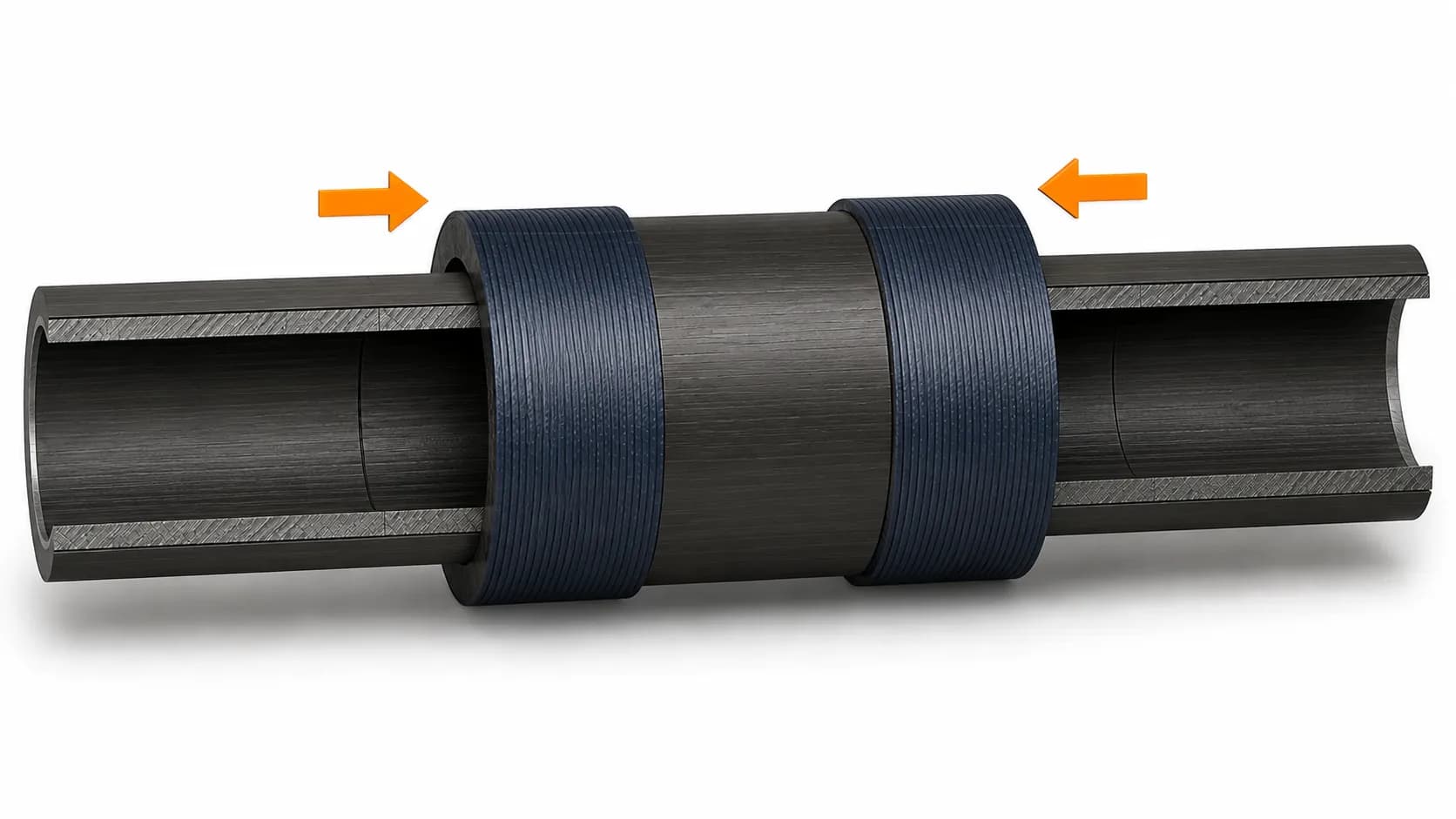
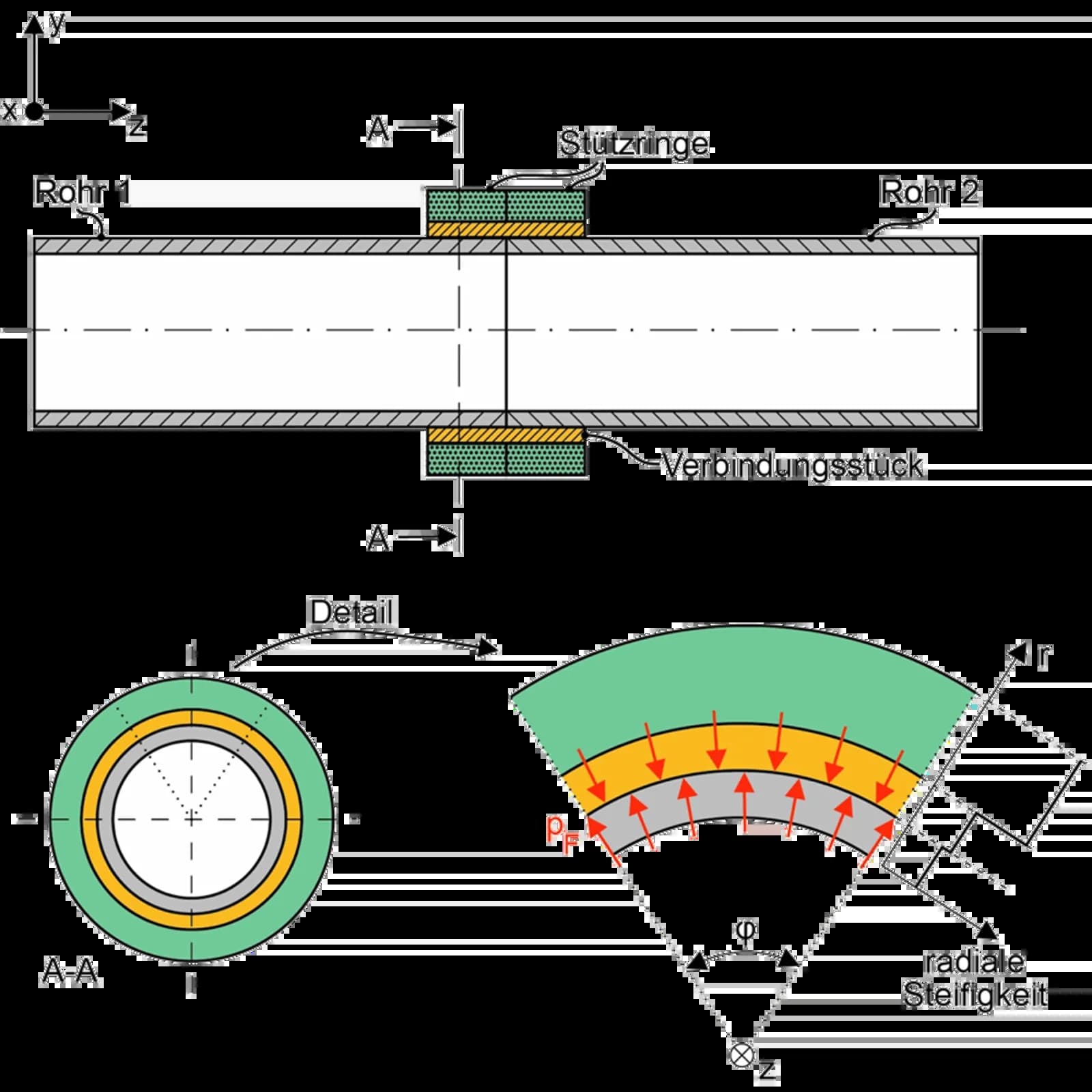
Das beschriebene Konzept besteht aus den zwei Rohren sowie drei wesentlichen Verbindungselementen: einem über den Rohrenden angeordneten Verbindungsstück und zwei außen angeordneten Stützringen.
Die Montage erfolgt in wenigen Schritten:
- Auf jedes Rohrsegment wird zunächst ein Stützring aufgeschoben.
- Das Verbindungsstück wird über die aneinanderstoßenden Rohrenden positioniert. Sein Innendurchmesser ist geringfügig kleiner als der Außendurchmesser der Rohrsegmente, sodass bereits ein leichter Längspressverband entsteht.
- Anschließend werden die beiden Stützringe axial auf das Verbindungsstück gepresst.
Da der Innendurchmesser der Stützringe kleiner als der Außendurchmesser des Verbindungsstücks ausgeführt ist, entsteht beim Aufpressen eine definierte radiale Vorspannung. Diese Vorspannung erzeugt den notwendigen Kontaktdruck zwischen Stützring, Verbindungsstück und Rohrsegment.
Das Ergebnis ist eine mechanisch gefügte, fluiddichte, lösbare Verbindung ohne Erwärmen, Schweißen oder Verkleben der Rohrenden.
Warum das Verbindungskonzept für hohe Innendrücke interessant ist
Wie Faser-Thermoplast-Verbunde und daraus gefertigte Rohre für hohe Innendrücke ausgelegt werden können, haben wir bereits in unserem Blogbeitrag Pipelines für erneuerbare Energie gezeigt. Damit das Rohrsystem seine Vorteile auch im Betrieb ausspielen kann, darf die Verbindungsstelle jedoch nicht zum Schwachpunkt werden.
Die Komponenten der Verbindung bestehen daher ebenfalls aus Faser-Thermoplast-Verbunden. Auf diese Weise lassen sich die mechanischen und chemischen Vorteile des Rohrwerkstoffs bis in die Fügestelle fortführen. Die Verwendung desselben Werkstoffsystems allein reicht allerdings nicht aus: Insbesondere an den Bauteilübergängen müssen Geometrie und Lagenaufbau gezielt an die jeweilige Belastung angepasst werden.
Eine druckbeständige Rohrverbindung muss dabei zwei Aufgaben erfüllen: Sie muss die aus dem Innendruck entstehenden Kräfte sicher zwischen den Rohrsegmenten übertragen und gleichzeitig die für die Dichtheit erforderliche Flächenpressung dauerhaft aufrechterhalten. Entscheidend sind daher nicht nur die Wanddicken der einzelnen Bauteile, sondern vor allem die Lastpfade innerhalb der Verbindung.
Umfangsverstärkte Stützringe halten den Fügedruck aufrecht
Die Stützringe besitzen überwiegend in Umfangsrichtung orientierte Endlosfasern. Dadurch können sie die beim Aufpressen entstehenden Ringkräfte besonders effizient aufnehmen. Ihre hohe Umfangssteifigkeit begrenzt die radiale Aufweitung und stabilisiert die Fügestelle.
Der radial wirkende Fügedruck wird innerhalb der Stützringe in Umfangskräfte umgewandelt und damit gezielt in die besonders belastbare Faserrichtung eingeleitet. Die Verbindung nutzt somit die hohe Zugsteifigkeit und Festigkeit der Endlosfasern, anstatt die Belastung hauptsächlich über die schwächere Dickenrichtung oder die Kunststoffmatrix abzutragen.
Diese werkstoffgerechte Lastübertragung unterscheidet das Konzept von Verbindungslösungen, die ursprünglich für unverstärkte Kunststoffrohre entwickelt wurden.
Radial anpassungsfähiges Verbindungsstück verteilt den Fügedruck
Das gewickelte Verbindungsstück wird so ausgelegt, dass es in Rohrlängsrichtung eine hohe Steifigkeit besitzt, sich in radialer Richtung jedoch gezielt anpassen kann. Diese kontrollierte Nachgiebigkeit ermöglicht es, sich an die Kontaktflächen der Rohrsegmente anzulegen, ohne die stabilisierende und lastübertragende Wirkung in Längsrichtung zu verlieren.
Beim Aufpressen der Stützringe wird das Verbindungsstück gleichmäßig gegen die Rohrenden gedrückt. Dadurch verteilt sich der Fügedruck über eine größere Kontaktfläche. Gleichzeitig können kleinere Fertigungsabweichungen und Oberflächenunebenheiten ausgeglichen sowie lokale Spannungsspitzen reduziert werden.
Auf diese Weise entsteht eine möglichst gleichmäßige Flächenpressung, die eine wesentliche Voraussetzung für die Mediendichtheit der Verbindung darstellt.
Faserorientierung passend zur jeweiligen Aufgabe
Stützringe, Verbindungsstück und Rohrsegmente übernehmen innerhalb der Verbindung unterschiedliche Funktionen. Ihr Lagenaufbau wird deshalb jeweils gezielt an die auftretenden Belastungen angepasst:
| Bauteil | Werkstoffgerechte Auslegung | Aufgabe innerhalb der Verbindung |
|---|---|---|
| Stützring | hoher Anteil an Umfangsfasern und hohe Umfangssteifigkeit | Fügedruck beim Aufpressen erzeugen, radiale Aufweitung begrenzen und Vorspannung aufrechterhalten |
| Verbindungsstück | hohe Längssteifigkeit bei gezielter radialer Anpassungsfähigkeit | Fügedruck verteilen, Kontaktflächen anpassen und eine gleichmäßige Dichtfläche erzeugen |
| Rohrsegment | an Innendruck und weitere Betriebslasten angepasster Lagenaufbau | Umfangs- und Längskräfte aus dem Innendruck sowie zusätzliche Betriebslasten aufnehmen |
Die Fügestelle wird somit nicht als homogener und möglichst steifer Block ausgeführt. Stattdessen erhält jedes Bauteil genau die Faserorientierung und Steifigkeit, die es für seine jeweilige Aufgabe benötigt. Erst das abgestimmte Zusammenspiel aller Komponenten ermöglicht eine druckbeständige, werkstoffgerechte Verbindung.
Einfache Montage direkt am Einsatzort
Ein wesentlicher Vorteil der mechanischen Verbindung ist der geringe Montageaufwand. Die Rohrenden müssen weder aufgeschmolzen noch verklebt oder aufwendig thermisch umgeformt werden. Auch eine besondere Vorbehandlung der Verbindungszonen ist nach dem beschriebenen Prinzip nicht erforderlich.
Für die Montage werden die Bauteile positioniert und die Stützringe mit einem geeigneten Presswerkzeug axial aufgebracht.
Das bietet mehrere praktische Vorteile:
- keine Schweißanlage und keine lokale Wärmezufuhr – und damit eine geringe thermische Belastung der Rohrsegmente
- keine Aushärte- oder Abkühlzeiten, die Verbindung ist unmittelbar nach dem Aufpressen tragfähig
- wenige, klar definierte Montageschritte
- geringer Platzbedarf für die Fügetechnik
- deutlich geringeres Systemgewicht als bei metallischen Flanschen und Fittings
Weil Verbindungselemente und Rohr aus derselben Werkstoffpaarung bestehen, entfallen Material- und Ausdehnungssprünge an der Fügestelle. Die thermischen Eigenspannungen bleiben dadurch gering.
Damit ist das Konzept besonders für modular aufgebaute Rohrsysteme, Vor-Ort-Installationen, Reparaturen und Versuchsaufbauten interessant.
Reproduzierbare Fügequalität
Beim Aufpressen der Stützringe lässt sich der entstehende Fügedruck messtechnisch erfassen. Aus den gemessenen Drücken kann auf die Qualität der Verbindung geschlossen werden: eine definierte, reproduzierbare Flächenpressung ist die Voraussetzung für Dichtheit und Lastübertragung.
Das eröffnet Potenzial für eine dokumentierbare Qualitätssicherung im Fertigungs- und Montageprozess – ohne dass die Fügestelle zerstörend geprüft werden muss.
Lösbar statt dauerhaft stoffschlüssig
Schweiß- und Klebeverbindungen sind für viele Anwendungen geeignet, lassen sich jedoch meist nur durch das Zerstören oder Heraustrennen der Fügestelle trennen. Das erschwert Wartung, Austausch und Anpassung eines Rohrsystems.
Beim beschriebenen Konzept entsteht dagegen keine stoffschlüssige Verbindung. Die Rohrsegmente bleiben im Grundzustand erhalten und werden weder aufgeschmolzen noch dauerhaft miteinander verklebt. Dadurch bleibt die Verbindung grundsätzlich demontierbar.
Für Betreiber und Anlagenbauer ergeben sich daraus konkrete Vorteile:
- einzelne Rohrsegmente können leichter ausgetauscht werden
- Versuchs- oder Produktionsanlagen lassen sich modular verändern
- Wartungsbereiche bleiben besser zugänglich
- Reparaturen erfordern nicht zwangsläufig das Ersetzen eines langen Rohrabschnitts